Sunday, 17 August 2014

Azadi March: What's Next?

Imran Khan, in tandem with Tahir ul Qadri, has successfully created a political crisis which is forcing the government to reconsider its stance regarding Khan's demands. People have gathered in the capital in large numbers, bringing the city to a stand still. So far, the demands made by PTI seem a bit extreme and unlikely to be accepted by the government, because the foremost demand is the dissolution of the government itself. If PTI is really serious about bringing down the government, and it has not just placed this demand as a bargaining chip, it probably needs to be a lot more proactive to achieve it. 

Bringing down a democratic government, even if it has seized power through electoral rigging, is usually more difficult than bringing down a dictator. Mainly because a democratic government enjoys considerable support among the masses as it is not possible to rig your way to the government without having any popular support at all. Secondly, a dictator resorts to force more easily, while a democratic government has to be pushed to its limits before it decides to start violence. Ultimately, it is the violence of the regime that sparks enough fervor in the protesters to bring it down, but it can also quell the protests. So far, despite the panic Khan has induced in the ruling party, the government has refrained from use of excessive force as much as it could.

Imran Khan has already lost enough time. His absence from the scene of protests has had a negative effect on the morale of the protesters. Besides, the number of protesters will reduce significantly as the week starts tomorrow. The time in which he can make any move towards escalating the situation is till tomorrow morning. Yesterday he hinted at marching towards the Red Zone to increase pressure on the government and the effects were visible. The N-League is in the habit of panicking which makes the effects of Khan’s threats very obvious. The security in Red Zone was reinforced and multiple N-League leaders reacted by warning the protesters of the consequences if they tried to march in that direction.

For the sake of people, neither PTI should try to actually cross the red line nor should the N-League push PTI to make that move. It is very obvious that there is no way PTI could oust N-League from the government without any bloodshed. So, all PTI can do without inciting violence is to use their extreme demands as bargaining chips for their more moderate demands. Imran Khan has made the point. He has told the world that the N-League government has been involved in rigging and its legitimacy is questionable at best. This certainly has affected the reputation and credibility of N-League and its leaders in Pakistan, as well as the world.


Thursday, 14 August 2014

Azadi March: Saving Democracy

The moment has arrived which was feared by the Pakistani government since it assumed power in 2013. People have flocked around the dissident leaders, determined to take down the rulers who, in their opinion, have done nothing to fulfill the promises made before the elections. Most importantly, the basic reason for the uprising is the alleged rigging in the general elections.

Whenever there are protests anywhere in the world, there are some people who actively participate while a larger number of people support the cause passively. Similarly, there are always some people who oppose the cause actively and a bigger number which opposes it passively. There is also a group of people, generally larger than all other groups, which remains neutral or apathetic. Usually the success and legitimacy of protests in a democratic environment, among other factors, depends on these numbers and ratios. In the case of current protests in Pakistan, although Imran Khan and Tahir ul Qadri have succeeded in mustering a number of active supporters bigger than what was expected earlier, there is a considerable number of people opposing the cause. The actual reasons range from simply the affiliation with N-League to complete ignorance of the demands of the protesters, but the base of all their arguments happens to be the notion that the protests will derail the democratic process that had seemingly become stable after a long period of dictatorship. This view was reinforced after Nawaz Sharif announced that his government is ready to form a judicial commission to investigate the alleged rigging. For many people, the protests after this announcement are totally unjustified.

Had this announcement been made about a month ago, at least Imran Khan would certainly have waited to see if this works, before giving a call for protests. But it seems like Nawaz Sharif tactically timed the announcement. It was very difficult for Imran Khan to call off the protests at the eleventh hour. He had mobilized thousands of workers who were in the danger of being demoralized. It was supposed to create a win win, in the sense that Nawaz Sharif was going to benefit from every possible outcome. In case Imran Khan cancelled his protests, his workers would lose the morale and he would have surely lost some support and Nawaz Sharif could have bought time in which he could have strengthened his position. In case Imran Khan pushed forward with his plans, which he eventually did, the announcement was supposed to provide a stronger argument against his narrative and as a result there would have been a reduction in the large number of people gathered around his cause. Unfortunately for Nawaz Sharif, it apparently didn’t work. Although that announcement is being used as an argument and those who opposed Imran Khan’s views have used it to ramp up their “save the democracy” mantra, it had almost no effect on Imran Khan’s supporters. The turnout in PTI rallies proved to be more than expected.

As for saving democracy, the question is whether the current government is actually democratic? Do people want to live in an actual democracy or all they need is a mere illusion? Can a government, which is being blamed for rigging by a significant number of people and which has done nothing so far to prove the legitimacy of the elections through which it assumed power, be called democratic? If people are afraid that democracy will be derailed, they should know that the current government has already derailed democracy. There is actually nothing to lose.


Monday, 21 July 2014

Gaza Conflict: The Palestinian Perspective


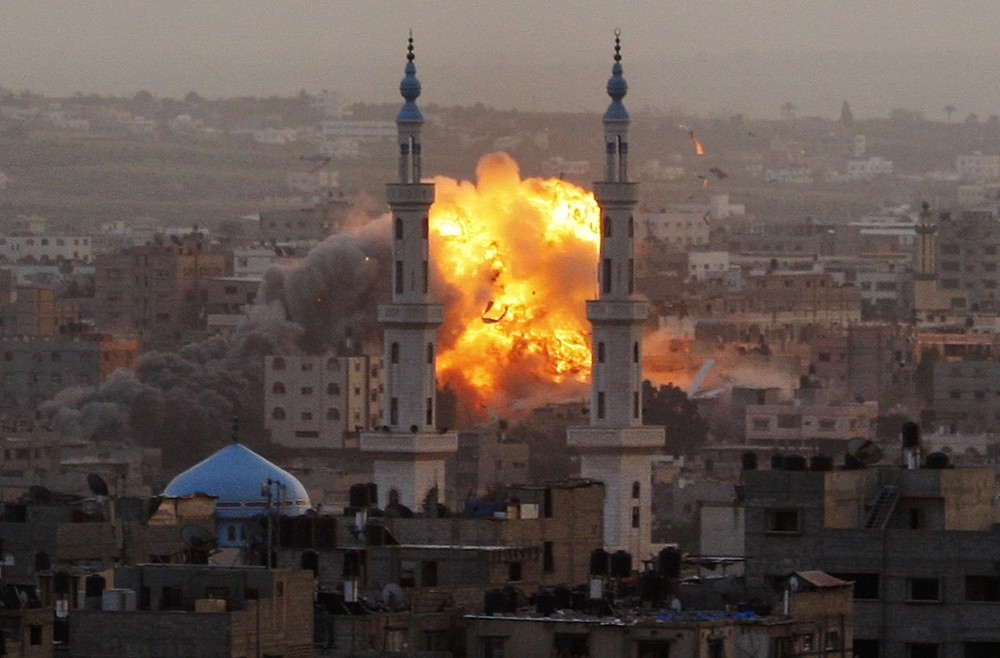
The current war between Hamas and Israel is said to have begun with the first rocket fired from Gaza on July 7, 2014. Most of the world, while condemning disproportionate use of force by Israel, is still wondering why would Hamas provoke such a powerful foe? Speculations range from the notion that Hamas wants to somehow drag Israel in the larger conflict involving current situation in Syria and Iraq, to the idea that Hamas just needs to flex its military muscle from time to time in order to keep up with the IDF. In any case, it is hard to imagine that a militia which clearly cannot withstand the powerful Israeli military in the long run would initiate an armed conflict. So, the real question is; Did Hamas really start the war?

The real problem lies with the shortsightedness of the media and its ability to selectively withhold or under-emphasize certain news while highlighting others. Everyone knows about the Operation Protective Edge. Everyone knows that the operation began on July 8, 2014 after Hamas fired rockets at Israel. But many people don’t know about the Operation Brother’s Keep which was launched immediately after the three Israeli teenagers were abducted. Officially, the objective of the operation was to search and rescue the kidnapped in the West Bank. But during the operation, according to a human rights NGO based in Geneva, the Israeli forces confiscated approximately $370,000 in cash and $2.5 million worth of property including cars, mobile phones, computers and even jewelry [1]. According to Amnesty International, the modus operandi of IDF and Shin Bet amounted to collective punishment [2]. According to Human Rights Watch, nearly 350 Palestinians were detained in the West Bank during the operation and none of them was charged. Most importantly, at least 5 Palestinians were killed during the operation [3]. Almost all of the Hamas officials in the West Bank were arrested. This certainly didn't look like a search and rescue operation. It was a massive crackdown on Hamas. Even some Israeli officials stated that the objectives of the operation go beyond simply rescuing the kidnapped Israeli teens. Note that all of this happened before Hamas had fired even a single rocket at Israel. It should now be clear who provoked and who responded.

According to another view, the provocation that laid the foundation of current conflict is actually the abduction and murder of the Israeli teens by Hamas. This would be correct if Hamas had really committed the crime. Hamas clearly denied any responsibility for the incident. Since Hamas is considered a terrorist organization by the West, it should be noted that terrorists always accept responsibility after committing an act of terror. Otherwise there is no point in terrorism. The objective of a terrorist organization is to terrorize the opponent and for that they have to claim responsibility. That’s how people would recognize them and fear them. Abducting three teenagers and then killing them in cold blood without demanding any ransom, prisoner swap or claiming responsibility for murdering them is absolutely pointless. Besides, no evidence has been presented by Israel to support its claim that Hamas was responsible for the incident. If the murder of Israeli teenagers can be blamed on Hamas, then the murder of the Palestinian teenager who was burned to death by Israelis in a reprisal attack can be blamed on the state of Israel. There are even speculations that the Israeli government knew that the teenagers had been killed a long time before it concluded the search operation [4]. Supposedly, Netanyahu wanted to buy time in order to eradicate Hamas from the West Bank while manipulating Israelis into supporting the operation.

Keeping in view the history of events, it can be seen that from the point of view of Hamas it is clear that Israel used the abduction of teens to eliminate Hamas from the West Bank which it has effectively done during Operation Brother’s Keep. In retaliation Hamas started firing rockets on Israel and afterwards IDF launched Operation Protective Edge. So, it’s not like Hamas provoked Israel. It is the other way round. The initial objective was to clear the West Bank from Hamas which Israel has already achieved during the search operation.


Sunday, 20 July 2014

Gaza Conflict: Legitimacy of Israel

The latest Israeli offensive, Operation Protective Edge, was officially launched on July 8, 2014. As of July 18, more than 250 Palestinians have been killed, 76% of whom were civilians[1], while one Israeli was also killed in a mortar attack by Palestinians. The international community has reacted as it always does. The Arab world has reluctantly condemned the damage caused to the life and property of Gazans, Turkey and Iran have explicitly opposed the Israeli actions, while USA has expressed its clear support for the offensive and has reiterated Israel’s right to defend itself. This conflict between the positions of Iran and some other regional powers and that of USA and its allies regarding the Palestinian issue is often observed but rarely anyone realizes the cause behind it? Why is it that some countries, and not only the governments but also most of the people, have a one sided approach to the conflict. Of course it would be because a certain approach serves the interests of one group while another approach serves the interests of another. But apart from interests, there always has to be a normative basis for adopting different approaches. Governments can’t justify their stances and actions to their people regarding any conflict on the basis of interests alone. Because for them the politics is about interests, but for the people it is about ideals. 

In the case of USA and its allies, the theoretical basis for the one sided approach towards the Palestinian conflict is the assumption of legitimacy of the Israeli state and the opposite is true for their rivals in the Muslim world. While taking a position on the conflicts between Israelis and Palestinians it is taken for granted by the West that Israel is a legitimate state. That’s where the recurring theme of ‘Israel’s right to defend itself’ comes from. This is the fundamental assumption to which the Iranian government and most of the people in the Muslim world disagree.

Political legitimacy is said to stem from the consent of people over whom a political entity exercises authority. For example, a government will be legitimate if it has the consent of the people who are being governed by it. Ideally, a legitimate authority is supposed to enforce its rule without the use of coercion. That is to say that people willingly submit to it. In case of Israel, the political legitimacy is usually concluded by affirming that the people of Israel submit to the authority of the state of Israel with their consent. The government is formed by popular vote and policies are devised by democratically elected representatives of the public. Thus, the state of Israel has the right to exercise authority over the land and people of Israel. Once the political legitimacy is established, the state also gets the right to defend itself.

However, while establishing the political legitimacy of Israel, a very important detail is usually overlooked. To understand it, one has to adopt the historical approach. Israel was established by the colonial Britain in Palestine. Talking of legitimacy, colonialism was itself illegitimate in the first place. The formation of the new state was made legal by the United Nations. The legitimacy of the UN is also debatable since it has five ‘permanent’ members which happen to have veto power. In terms of legitimacy based on consent of the people, the Palestinians never consented to any UN resolution depriving them of their homeland to form another state. It is widely accepted that there can be legal actions which are not legitimate. Apparently the UN partition plan that divided Palestine was one of them.

To make it simple, the land of Israel originally belongs to the Palestinians. So, the legitimacy of the state of Israel doesn't depend on the consent of Israelis. It instead depends on the consent of Palestinians. This point of view makes Israel an illegitimate entity as the Palestinians collectively oppose the existence of the Zionist entity in their homeland and thus it can be said that Israel does not have the right to defend itself. Creation of Israel was a deliberate political mistake by the West for which it has been paying with money in the form of aid to Israel, the Palestinians have been paying with their blood, and Israeli Jews have been paying with the constant threat to their existence.


Saturday, 5 July 2014

Lessons from Iraq

There is a problem in global politics known as the Middle East problem; probably the most complex problem that there is. It all began after the colonial era, when the Western powers started evacuating the Middle East and divided it into nation states with future plans to create hegemony. In the beginning it worked out well but soon it was realized that the borders have been drawn quite randomly. Some people were divided between different states and some states were populated with different people. Everyone knew that the dormant volcano of the Middle East will erupt one day with dire humanitarian consequences. Throughout the last century the world powers kept a lid over the problem by suppressing uprisings with the help of brutal dictators and forging alliances with totalitarian regimes but it was evident that a permanent solution is needed. Some think that the problem was created by the imperialist powers deliberately in order to divide the people of Middle East so that they could be ruled easily. But evidently a stable Middle East is a win win for the World powers as well as the people of the region. The problem only is that to reach that stability, the region will have to go through a period of extreme instability and anarchy, and things could get even worse if the regional powers get drawn into the conflicts. 

Bernard Lewis is a British-American historian who specializes in the political history of the Middle East. In early 90s a plan to reshape the Middle Eastern states emerged and was attributed to him. The plan was to simply redraw the borders according to the ethnic and sectarian demographics of the Middle East. Amazingly, starting with the Arab Spring, the Middle East erupted along the same lines as proposed by the Bernard Lewis plan. The recent advances by Daesh or ISIS (now just IS) have already created the sketch of the Sunni state right in the middle of the map. Iraqi Kurds have also seized the opportunity and Peshmurga (the Kurdish armed force) has taken over Kirkuk after it was abandoned by the Iraqi army. It has been announced that the Kurdish Regional Government (KRG) is going to hold a referendum to decide whether the Iraqi Kurds want to live with Iraq anymore. The question whether it’s all happening organically or is it being fertilized by the Western powers is largely speculative. Although it is a fact that USA and its allies provided support to the Syrian rebels, many of which later joined the Jihadist militias, especially ISIS. Yet there is no evidence of any direct involvement of the West in the current crisis in Iraq. Besides it was eventually going to happen. If West ever participated directly in creating this chaos, it was about a century ago when they drew the borders contrary to the demographic lines. 


As for Pakistan, the point of concern is its disintegration shown in the Bernard Lewis map. Since Iraq is going through that phase, Pakistan can learn some lessons from it to save itself from a similar fate. The population of Iraq is divided in three major groups. The Shi'ite who dominate the southern Iraq, the Sunnis who dominate the northwestern Iraq and the Kurds who dominate the north eastern regions of the country. Iraq is breaking up along these lines. Pakistan has been going through sectarian tensions for almost thirty years, but that’s not what is going to cause its disintegration. Sectarianism in Pakistan can cause instability and anarchy in the country which can in turn contribute to its disintegration, but it cannot directly cause it, mainly because of two reasons. Firstly, in Pakistan Shi'ite and Sunnis live side by side. Unlike Iraq, sectarian divisions in Pakistan don’t correlate with geopolitical divisions. Secondly, there is no class difference between the two sects. It’s not like Sunnis are generally more prosperous while Shi'ite are being neglected by the state. In Iraq, Sunnis and Shi'ite lived in separate regions and allegedly the current government was ignoring the Sunni population and thus the Sunni dominated areas were reportedly less prosperous than the south. So, it’s not entirely about sectarianism, it is also about class difference. 

However, in the case of Pakistan, a similar picture as that of Iraq can be conceived by just substituting sects with ethnicity. The provinces of Pakistan are clearly divided along ethnic lines and unfortunately there exists a class difference between the provinces. Punjab is considered the most prosperous province while Baluchistan is considered the most neglected one. The situation in Iraq gives the Pakistanis an opportunity to learn from other’s mistakes. It is not practically possible to merge the ethnic demographics of the country. There would be no disintegration if people of all ethnic backgrounds live side by side, instead of living in different parts of the country. But that of course is far from possible. The only option left is to minimize the class difference between the provinces. If the Pakistani politicians are smarter than their Iraqi counterparts, then this should be their top priority. 

Monday, 16 June 2014

An Underlying Cause of Insurgency

The Pakistani government has finally decided to use force against the TTP in a full fledged military operation named “Zarb e Azb”. Fighter jets have been pounding the militant hideouts since the attack on Jinnah International Airport and ISPR claims that the Uzbek terrorists responsible for planning the attack have been killed in the air strikes. The operation is being backed by most of the political parties of the country, which is quite an achievement for the N-League led government.

TTP has issued a statement[1] denouncing the decision of the government and threatening retaliatory attacks. Aside from the usual threats and angry remarks, there was something very important that was said by the TTP spokesman. He exclusively threatened to attack the Punjab province and the Federal capital. He even went on to invite “all Baloch, Sindhis, Pashtuns and ‘Islam-loving’ Punjabis to unite” with them “to rid them of the clutches of the tyrants”. The meaning is self evident. He called upon all Sindhis, Baloch and Pashtuns but not ‘all’ Punjabis. Only ‘Islam-loving’ Punjabis. Neither did he threaten to attack all of the Pakistan. Instead he pointed out Islamabad and Punjab. This reveals the underlying provincial discrimination that has caused many troubles for the Pakistanis in the past. 

Religious extremism is usually blamed for the insurgency in Pakistan and it’s not entirely false. But another important factor is the dissatisfaction of the people of aforementioned provinces with the state. The statement of the TTP spokesman clearly indicates that the terrorists not only capitalize on the extremist views of many Pakistanis regarding religion, but also on their discontent with the state. Even religious extremism stems from illiteracy which has been caused by the neglect of Pakistani government in educating the people of underdeveloped areas. 

The Pakistani generals are doing their job. They are supposed to protect the country from any threat by the use of force. That’s what they are doing now and that’s what they have done in the past by successfully driving out terrorists from Swat valley and adjacent areas. But the real and long term solution of insurgency lies within the hands of the politicians. It is their job to keep the population satisfied. It is them who are responsible for the dissatisfaction of Sindhis, Baloch and Pashtuns. 

The military is confident that the operation will be successful. But the real success is not to eliminate the Taliban. The real success is to eliminate the provincial discrimination, which can only be achieved by the politicians. This however doesn’t mean that the operation against the terrorists shouldn’t be launched. It means that the military efforts should be supplemented by political efforts. Everyone knows that the Army is capable enough to conduct a successful military operation, but it’s also known that the Pakistani politicians are equally incompetent and dishonest. That’s what keeps Pakistan from staying stable in the long run.


Tuesday, 15 April 2014

The Identity Crisis

More than sixty years have passed since the inception of Pakistan and a lot has happened since then. The country swayed between democracy and dictatorship, developed a nuclear arsenal, survived two major wars with the neighboring India and is still struggling through the war on terror. Pakistanis learnt many things too. They learnt that the cost of wars will always be paid from their pockets, that the world powers are their friends only till their interests are aligned with them, that democratic leaders and dictators can both somehow manage to get away with all the corruption and still come back to power. But what they have not learnt till now is the answer to the most basic question, “Who are we?”

Most of the people in the world link their nationality to ethnicity. For example, Saudi Arabians are the host of Arab tribes who have been inhabiting the deserts of central Arabia for centuries. Iranians are a multitude of ethnic groups which have dwelled in the region for hundreds of years and gradually consolidated into a nation. Same goes for Afghans, Uzbeks, Tajiks, Turks etc. Pakistanis don’t fall into this group for multiple reasons. Firstly, they don’t comprise of a single ethnicity or miscible ethnicities. Each province of Pakistan is home to a different ethnic group having stark differences with other ethnic groups of the country. Secondly, many of them had not even been living in what is now Pakistan before the partition of the Indo-Pak Subcontinent. They migrated from the present day India to live in the newly formed state. Moreover, most of the ethnic groups found in Pakistan also dwell in India. For example, Punjab is divided between Pakistan and India and Punjabis live on both sides of the border. So, Pakistanis can’t define their nationalism on the basis of ethnicity.

Above mentioned scenario is that of a land which is turned into a country by the people inhabiting it. Another scenario is that of a people who become a nation by inhabiting a land. Canadians, for instance, don’t share common ethnic background. They even comprise of different races altogether. All they share is a common land. Unfortunately, Pakistanis cannot define their identity even on this model. Before the creation of Pakistan, the people of Pakistan and present day India inhabited a common land. If the land is supposed to define the Pakistani nationalism, then why was the Subcontinent partitioned in the first place?

The only grounds left for defining Pakistani nationalism is ideology. The Two Nation Theory is what made the present day Pakistanis break away from United India. But then arises the question whether the Two Nation Theory necessitates Pakistan to be an Islamic state, or can the theory remain intact while the country inches towards secularism? Or precedently, is the theory even plausible?

The idea that the Two Nation Theory is implausible is not new, but recently it has grown stronger in the minds of many Pakistanis who tend to adhere to the secular principles. The fact that most of the people who had experienced the events which defined the postulates of the Two Nation Theory are no longer alive, and the next generation was unable to grasp the concept of Muslim nationalism in the Subcontinent, contribute directly to the dissatisfaction of many Pakistanis with their national identity. Regardless, the reality is that Pakistan has been created, and debating over whether the theory on which it relied for its ideological foundation was plausible or not is now irrelevant. The events of 1947 cannot be undone. Living apart for half a century has surely turned the Pakistanis and Indians into two separate nations even if it was not so at the time of partition, and there is absolutely no chance of reunification, particularly because of the blood that has been spilt on both sides.

What difference then remains between the Pakistanis and Indians? Both shared a common land and both share common ethnic background. The only difference that remains is that of religion. Many have tried to negate this fact but its the only conclusion on which everyone will arrive after going through the history of Pakistan movement.   

The question whether the partition in the name of religion necessitates the establishment of an Islamic state for the Pakistanis can be debated over. There are two possibilities; either this country was created to be an Islamic state or a Muslim state. The term ‘Muslim state’ might be new for some people, but it simply means a state in which Muslims live in majority and can practice their religion freely without any un-Islamic or secular principles that might come in the way of their freedom of religious practice. It does not include the imposition of the Sharia by the government. On the other hand, an Islamic state is one in which every component of the state and the society is regulated by the Islamic principles. Regardless of this decision, which must be taken collectively by the people of Pakistan, the Pakistanis can only be defined as the Muslims of Subcontinent who chose to live in a separate state to practice their religion freely and openly, which was not possible in a Hindu dominant society.